
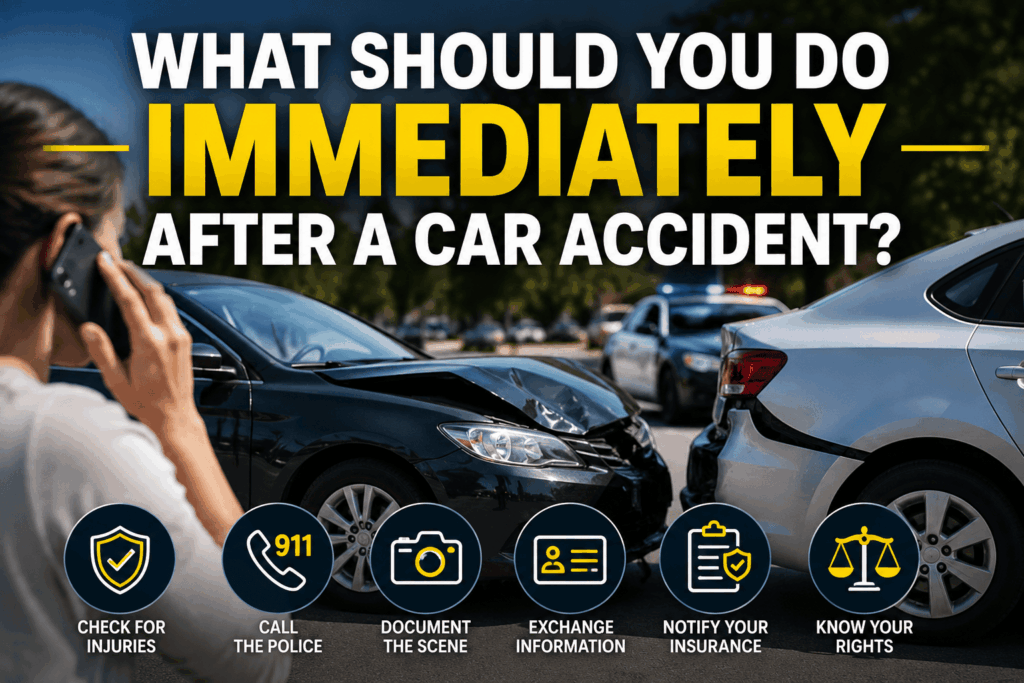
A car accident can happen unexpectedly and leave drivers feeling stressed, confused, and overwhelmed. Whether the accident is minor or severe, the actions you take immediately afterward can significantly affect your health, safety, insurance claim, and legal rights.
Knowing what to do after a car accident can help protect you from unnecessary complications and improve your chances of receiving fair compensation if injuries or damages occur. Here are the important steps you should take immediately after a car accident.
1. Stay Calm and Check for Injuries
The first priority after any accident is safety. Take a deep breath and remain as calm as possible. Check yourself, your passengers, and others involved for injuries.
If anyone is seriously injured:
- Call 911 immediately
- Request medical assistance
- Avoid moving injured individuals unless necessary for safety
Even if injuries seem minor, seeking medical attention is important because some symptoms may appear hours or days later.
2. Move to a Safe Location
If the accident is minor and the vehicles are still drivable, move them to a safe area away from traffic. Turning on hazard lights can help alert other drivers and reduce the risk of another collision.
If moving the vehicle is unsafe or impossible, stay inside with your seatbelt fastened until emergency responders arrive.
3. Call the Police
In many cases, contacting law enforcement is highly recommended after an accident. A police report provides official documentation of the incident, which can be valuable for insurance claims and legal cases.
When speaking with the police:
- Provide accurate information
- Stick to the facts
- Avoid guessing or speculating
Request a copy of the accident report or ask how to obtain it later.
4. Exchange Information With the Other Driver
Collect important details from everyone involved in the accident, including:
- Full name
- Phone number
- Address
- Driver’s license number
- Insurance company information
- Vehicle registration details
If there are witnesses nearby, ask for their contact information as well. Witness statements can be helpful if liability becomes disputed.
5. Take Photos and Document the Scene
Evidence collected at the accident scene can play a critical role in supporting your claim. Use your phone to take clear photos and videos of:
- Vehicle damage
- License plates
- Road conditions
- Traffic signs
- Skid marks
- Injuries
- Weather conditions
The more documentation you gather, the stronger your case may become.
6. Avoid Admitting Fault
After an accident, emotions can run high, and many people instinctively apologize. However, even simple statements can later be interpreted as admitting fault.
Avoid:
- Saying “It was my fault”
- Arguing with the other driver
- Making assumptions about what caused the accident
Let insurance companies and investigators determine liability based on evidence.
7. Seek Medical Attention Immediately
Even if you feel fine, it is important to see a medical professional after a car accident. Some injuries, including whiplash, internal injuries, and concussions, may not show symptoms right away.
Prompt medical evaluation can:
- Protect your health
- Create medical documentation
- Strengthen your injury claim
Delaying treatment may give insurance companies an excuse to argue that your injuries were not caused by the accident.
8. Notify Your Insurance Company
Report the accident to your insurance provider as soon as possible. Provide accurate information and cooperate with their investigation.
When speaking with insurance adjusters:
- Stick to factual details
- Do not exaggerate injuries
- Avoid recorded statements without legal advice if injuries are serious
Insurance companies often try to minimize payouts, so it is important to protect your rights.
9. Keep Records of Everything
Maintaining organized records can help support your case if legal action becomes necessary. Save:
- Medical bills
- Repair estimates
- Prescription costs
- Rental car expenses
- Accident reports
- Insurance communications
Detailed records can help calculate the full extent of your damages and financial losses.
10. Contact a Personal Injury Lawyer
If the accident resulted in injuries, major vehicle damage, or insurance disputes, consulting a personal injury lawyer is highly recommended.
An experienced attorney can help:
- Investigate the accident
- Gather evidence
- Negotiate with insurance companies
- Protect your legal rights
- Pursue compensation for medical expenses, lost wages, and pain and suffering
Many accident victims accept low settlement offers because they do not fully understand the value of their claim.
Common Mistakes to Avoid After a Car Accident
Many people unintentionally harm their case after an accident. Common mistakes include:
- Failing to call the police
- Not seeking medical treatment
- Posting accident details on social media
- Accepting a quick insurance settlement
- Delaying legal advice
Taking the right steps early can make a significant difference in the outcome of your claim.
Why Quick Action Matters
Evidence can disappear quickly after an accident. Witness memories fade, vehicle damage may be repaired, and surveillance footage may be erased.
Acting quickly helps preserve important evidence and strengthens your case if compensation becomes necessary.
Conclusion
Knowing what to do immediately after a car accident can help protect your health, finances, and legal rights. Staying calm, documenting the scene, seeking medical attention, and contacting a qualified attorney are all important steps that can improve the outcome of your case.
If you or a loved one has been injured in a car accident, Sulfab Law Office is here to help. As a trusted San Francisco Immigration, Intellectual Property & Personal Injury Law Firm serving San Francisco and surrounding areas, our experienced legal team is dedicated to protecting your rights and helping you pursue the compensation you deserve. Contact Sulfab Law Office today for professional legal guidance and support.
Disclaimer: The information on this website and blog is for general informational purposes only and is not professional advice. We make no guarantees of accuracy or completeness. We disclaim all liability for errors, omissions, or reliance on this content. Always consult a qualified professional for specific guidance.