
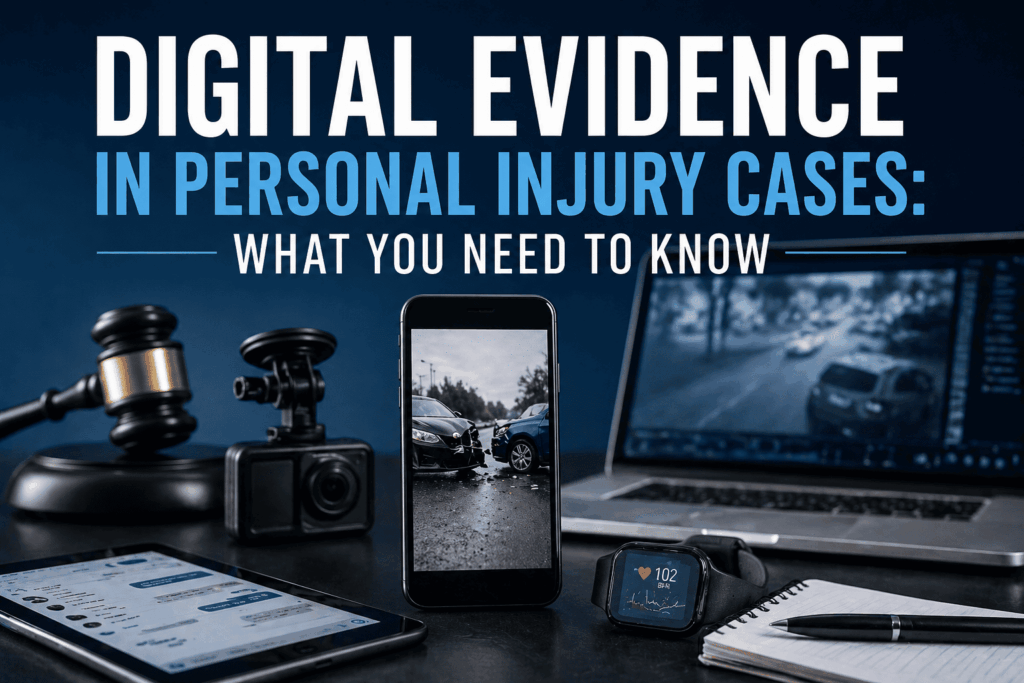
In the contemporary world, there is a lot more to a personal injury case than just testimony from witnesses and documentation from the hospital. In modern times, digital evidence has gained immense importance in establishing liability and impact on the life of the injured party. This applies not only to motor vehicle accidents but all kinds of cases.
What Is Digital Evidence?
Digital evidence can be defined as the information that is digitally stored or transmitted and can be utilized as evidence in any legal proceeding. Digital evidence is very useful when it comes to proving the facts in personal injury cases.
Examples of digital evidence include:
- Pictures and video clips from mobile phones
- Surveillance camera footage
- Footage from dashcams
- GPS tracking information
- Information from social media accounts
- Information from emails
- Data from wearable devices (fitness trackers, smartwatches)
This type of evidence is often time-stamped and difficult to alter, making it highly reliable in court.
Why Digital Evidence Is Important
The digital evidence is very crucial in any personal injury case because it offers objective information to support your arguments and reduce any form of uncertainties.
Some of the benefits associated with digital evidence are:
- Clearly establishes the fault and liability
- Reinforces your argument through visual evidence
- Verifies timelines and sequence of events
- Boosts your negotiating power with insurance companies
- Enhances your ability to receive compensation
For example, a video showing how the accident happened will offer strong evidence.
Types of Digital Evidence That Can Strengthen Your Case
Various types of digital evidence are needed for various reasons. It is important to understand what you need to gather because it will give your case a good start.
1. Photos and Videos
Taking pictures and videos of the accident location, injuries, and damaged property can provide valuable evidence.
2. Surveillance Footage
Surveillance cameras on the road or around the area of the accident might have recorded the event.
3. Social Media Content
Posts, comments, and shared locations can support your claims—but they can also be used against you if they contradict your statements.
4. Mobile Phone Data
Mobile phone records and messages can help determine if some distractions were involved in the accident.
5. Wearable Device Data
Data about your health and fitness can help prove the extent of injuries.
How Digital Evidence Can Work Against You
Although digital evidence can boost your case, there are risks in using such evidence incorrectly or carelessly.
These may include:
- Posts on social media contradicting your injuries
- Deleting or modifying information that affects your credibility
- Releasing too much information into the public domain
- Misunderstandings about incomplete evidence
One clear example is using photographs that show you participating in physically active pursuits when you claimed to have severe injuries.
Tips to Protect and Use Digital Evidence Effectively
It is important to take the correct measures from the start to preserve evidence and safeguard your rights.
Best practices:
- Photograph and videotape the accident scene promptly.
- Store all emails, texts, and other forms of correspondence.
- Do not discuss your legal case on social media.
- Backup your evidence.
- Do not release any evidence until you speak with an attorney.
These procedures will keep your evidence genuine, protected, and admissible.
Legal Considerations for Digital Evidence
All digital evidence is not automatically admitted in the court. They should satisfy some legal requirements like being authentic, relevant, and reliable.
An experienced personal injury lawyer can assist you in:
- Authenticating digital evidence
- Properly collecting and preserving digital evidence
- Presenting digital evidence in legal proceedings
- Ensuring your privacy and legal rights are protected
Failure to seek legal advice when handling digital evidence might make you commit legal errors.
Conclusion
Digital evidence has transformed personal injury cases by providing clear, reliable, and time-stamped proof of events. From photos and videos to social media and wearable data, this type of evidence plays a crucial role in establishing liability and securing fair compensation. However, it must be handled carefully to avoid mistakes that could harm your claim.
If you’re dealing with a personal injury case, working with the right legal team can make all the difference. Sulfab Law Office is a leading personal injury law firm in San Francisco, known for its expertise in handling complex cases and leveraging digital evidence effectively. Their experienced personal injury attorneys are committed to protecting your rights and helping you achieve the compensation you deserve.
Disclaimer: The information on this website and blog is for general informational purposes only and is not professional advice. We make no guarantees of accuracy or completeness. We disclaim all liability for errors, omissions, or reliance on this content. Always consult a qualified professional for specific guidance.